

This traditional Thanksgiving stuffing is buttery, savory, and full of tender bread, crisp celery, and fragrant herbs. I love serving it straight from the baking dish, where the golden top gives way to a soft, flavorful center.
Why You’ll Love This Traditional Thanksgiving Stuffing
This classic side dish brings familiar holiday flavors to the table with simple ingredients and easy steps. You can prepare the bread and chop the vegetables ahead, then mix and bake the stuffing when you’re ready. It pairs beautifully with a Thanksgiving dinner, but it’s cozy enough to enjoy alongside a weeknight roast, too.
Traditional Thanksgiving Stuffing Ingredients & Substitutions
- 12 cups dried bread cubes, about 1 pound. Use sturdy white, sourdough, or country-style bread.
- 8 tablespoons unsalted butter
- 1 large yellow onion, finely chopped
- 4 celery stalks, finely chopped
- 2 teaspoons chopped fresh sage, or 3/4 teaspoon dried sage
- 1 teaspoon fresh thyme leaves, or 1/2 teaspoon dried thyme
- 1/4 cup chopped fresh parsley
- 1 teaspoon kosher salt, plus more to taste
- 1/2 teaspoon black pepper
- 2 large eggs
- 2 cups low-sodium chicken or vegetable broth, plus more as needed
For a richer flavor, use a mixture of white bread and sourdough cubes. Vegetable broth works well if you want a meat-free version. If you only have fresh bread, dry the cubes in a low oven before starting so they can absorb the broth without becoming mushy.
Step-by-Step Instructions to Make Traditional Thanksgiving Stuffing
1. Dry the bread cubes
If your bread is not already dry, spread the cubes on baking sheets and bake at 300°F for about 20 to 30 minutes, stirring once, until dry but not browned. Let them cool, then transfer them to a large bowl.
2. Cook the vegetables and herbs
Melt the butter in a large skillet over medium heat. Add the onion and celery and cook for 8 to 10 minutes, stirring now and then, until tender. Stir in the sage, thyme, parsley, salt, and pepper.
3. Moisten the bread
Spoon the warm vegetable mixture over the bread cubes and toss gently. In a separate bowl, whisk the eggs with 2 cups of broth. Pour the mixture over the bread a little at a time, tossing until the cubes are evenly moistened. Add more broth if the bread still feels dry, but avoid soaking it.
4. Bake until golden
Heat the oven to 350°F. Spoon the stuffing into a buttered 9-by-13-inch baking dish and cover with foil. Bake for 25 minutes, then uncover and bake for another 15 to 20 minutes, until the top is golden and the center is hot. Rest for 5 minutes before serving.
Tips for Success
- Dry bread is the key to stuffing with a tender center and crisp top. Fresh, soft bread can turn soggy.
- Add the broth gradually. Different breads absorb liquid at different rates, so you may not need every drop.
- Taste the vegetable mixture before adding the eggs and broth, then adjust the seasoning if needed.
- For a crispier top, bake uncovered for the full cooking time, checking that the center stays moist.
- Use a baking dish rather than stuffing a bird. This makes it easy to check that the dish is heated through.
Variations of Traditional Thanksgiving Stuffing
For a little sweetness, fold in 1/2 cup dried cranberries or diced apple. Chopped toasted pecans or walnuts add a lovely crunch. You can also add sliced mushrooms, sautéed with the onion and celery, for an earthier flavor. To make the dish more savory, stir in a pinch of smoked paprika or extra fresh thyme.
Serving Suggestions: What to Pair with Traditional Thanksgiving Stuffing
Serve this stuffing alongside roasted turkey, baked chicken, or a hearty vegetable main. It’s especially good with mashed potatoes, green beans, roasted carrots, cranberry sauce, and gravy. If you’re building a holiday plate, add something bright and crisp, such as a simple green salad, to balance the rich, buttery flavors.
Storage & Reheating Instructions
Cool leftover stuffing, then store it in an airtight container in the refrigerator for up to 4 days. Reheat individual portions in the microwave, or place the stuffing in a covered oven-safe dish and warm it at 325°F until hot. Add a splash of broth before reheating if it seems dry. You can also freeze the baked stuffing for up to 2 months; thaw it overnight in the refrigerator before reheating.
Memories Made Around the Table
I always think of a full holiday table when I smell onion, celery, and sage cooking in butter. This is the kind of side dish I like to set down in the middle of the table so everyone can scoop up a little extra of the golden top. Leftovers are just as welcome the next day, tucked beside roasted vegetables or served with a spoonful of gravy.
FAQs
Can I make traditional Thanksgiving stuffing ahead?
Yes. Prepare the bread cubes and cook the vegetables a day ahead, then refrigerate them separately. You can also assemble the stuffing in its baking dish, cover it, and refrigerate it overnight. Let the dish sit at room temperature for about 20 minutes before baking, and add a few extra minutes if it is still cold.
How do I keep stuffing from getting soggy?
Start with fully dried bread and add the broth gradually. The bread should be moist throughout but should not sit in liquid. Baking uncovered at the end helps the top turn crisp.
Can I use dried herbs instead of fresh?
Yes. Use about one-third as much dried sage and thyme as fresh, then taste and adjust the seasoning to your liking.
Can I make this stuffing without eggs?
Yes. Leave out the eggs and use broth to moisten the bread. The stuffing may be a little less set, so keep an eye on the texture and avoid adding too much liquid.
Final Thoughts
This traditional Thanksgiving stuffing is simple to prepare, easy to customize, and full of the herbs and buttery flavor that make a holiday meal feel complete. Keep this dependable recipe nearby whenever you want a comforting side dish to share.
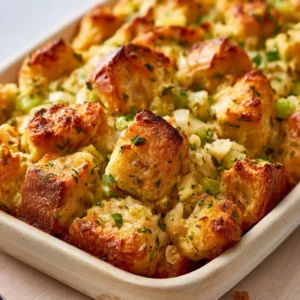
Traditional Thanksgiving Stuffing
Equipment
- 1 Baking sheets
- 1 Large Skillet
- 1 Large bowl
- 1 Whisk
- 1 9-by-13-inch baking dish
- 1 Aluminum foil
Ingredients
- 12 cups dried bread cubes about 1 pound; sturdy white, sourdough, or country-style bread
- 8 tablespoons unsalted butter
- 1 large yellow onion finely chopped
- 4 celery stalks finely chopped
- 2 teaspoons fresh sage chopped; or 3/4 teaspoon dried sage
- 1 teaspoon fresh thyme leaves or 1/2 teaspoon dried thyme
- 0.25 cup fresh parsley chopped
- 1 teaspoon kosher salt plus more to taste
- 0.5 teaspoon black pepper
- 2 large eggs
- 2 cups low-sodium chicken or vegetable broth plus more as needed
Instructions
- If your bread is not already dry, spread the cubes on baking sheets and bake at 300°F for about 20 to 30 minutes, stirring once, until dry but not browned. Let them cool, then transfer them to a large bowl.
- Melt the butter in a large skillet over medium heat. Add the onion and celery and cook for 8 to 10 minutes, stirring now and then, until tender. Stir in the sage, thyme, parsley, salt, and pepper.
- Spoon the warm vegetable mixture over the bread cubes and toss gently. In a separate bowl, whisk the eggs with 2 cups of broth. Pour the mixture over the bread a little at a time, tossing until the cubes are evenly moistened. Add more broth if the bread still feels dry, but avoid soaking it.
- Heat the oven to 350°F. Spoon the stuffing into a buttered 9-by-13-inch baking dish and cover with foil. Bake for 25 minutes, then uncover and bake for another 15 to 20 minutes, until the top is golden and the center is hot. Rest for 5 minutes before serving.